

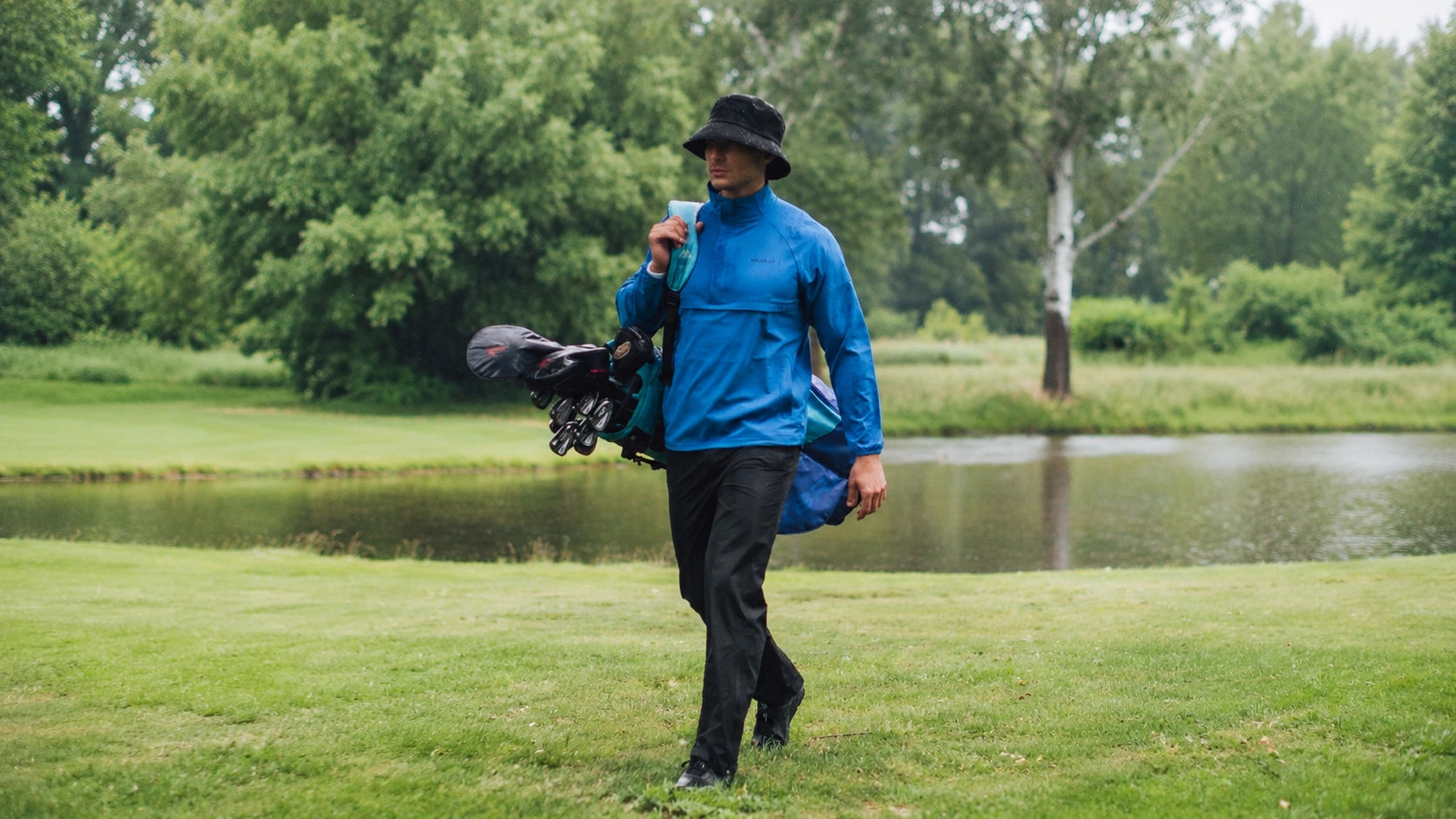
Three jackets can hang side by side in a pro shop with almost identical price tags and completely different jobs. One will keep you dry through four hours of steady rain. One will get you back to the clubhouse from a passing shower. One will shrug off the dew on the first tee and nothing more. The labels tell you which is which, but only if you know what the words mean.
Here is the plain version, and what it should change about the kit you actually buy.
The three words that matter
Water repellent
A water repellent finish is a coating applied to the outside of a fabric. Rain beads up and rolls off instead of soaking in. It is not a barrier. Once the coating is saturated, or once it has worn down after a few dozen washes, water goes through.
Water repellent is the right answer for the things you wear most of the time. Trousers and shorts are the obvious case, because full waterproof legwear is hot and noisy and you do not want it on unless it is genuinely raining. The Sparrow golf short at £34.99 and the Keston golf jogger at £19.99 both work this way. They handle dew, drizzle and a wet bunker without turning the round into a sauna.
Showerproof
Showerproof sits in the middle. There is a real barrier in the fabric, so it will hold out rain rather than just repelling it, but it is built light and is not designed to be sat under a downpour for four hours. The trade is weight and packability. A showerproof jacket lives in your bag all season and weighs almost nothing, which means it is actually there when the sky turns.
This is the layer most club golfers underuse. British summer rain is usually twenty minutes, not two hours, and a jacket you will genuinely carry beats a heavier one you leave in the boot. The Raven showerproof jacket at £24.99 is built for exactly that, and the Cassowary showerproof bucket hat at £24.99 covers the part of you that gets wet first.
Waterproof
Fully waterproof means a membrane and, critically, taped seams. Every needle hole in a garment is a hole in the barrier, so a jacket or trouser can use excellent fabric and still leak if the seams are left open. If a product describes itself as waterproof, taped seams are the thing to confirm.
Waterproof legwear is a specific purchase for a specific day. The Jay waterproof trouser at £69.99 is the most expensive single garment in this article, and that is the honest shape of the category: proper waterproofing costs more, and you will wear it perhaps a dozen times a year. It is worth it on those dozen days and pointless on the rest.

Breathability is the half of the spec nobody reads
Keeping rain out is only half the problem. You generate a surprising amount of moisture walking six miles with a bag, and if that moisture cannot escape you end up damp anyway, from the inside. A jacket that keeps every drop out and breathes badly will leave you as wet as one that leaks.
This is why the cheapest plastic rain shells feel awful after two holes. It is not that they let water in. It is that they let nothing out. When you are comparing two jackets at similar money, breathability is usually the thing separating them, and it is the thing that decides whether you keep the jacket on or take it off and get rained on anyway.
The parts of you that get wet first
Golfers buy a jacket and stop. The round usually gets ruined somewhere else.
- Hands. A wet leather glove is a lost round. It goes slick and stops gripping, and no amount of towel work brings it back. Rain gloves at £9.99 a pair do the opposite of what people expect: they grip better wet than dry. Keep a pair in the bag permanently.
- Head. Water running off a peak and down your collar is what actually ends a round early. A brim you can rely on matters more than the jacket hood you will not use because it kills your peripheral vision on the backswing.
- Bag and grips. The 66 inch double canopy umbrella at £24.99 is protecting your grips and towel as much as your head. A double canopy vents wind through the middle instead of inverting, which is the failure mode of every cheap umbrella on an exposed links.
What to actually own
Most golfers do not need a full waterproof suit. A sensible British kit looks like this:
- A packable showerproof jacket that lives in the bag. Not the best jacket you can afford. The one you will genuinely carry every round.
- Water repellent trousers or shorts as your default. Comfortable enough to wear when it is dry, capable enough to handle drizzle without a change.
- Rain gloves and a decent umbrella. Cheap, small, and they save more rounds than anything else on this list.
- Fully waterproof legwear, eventually. Buy it when you have been caught out twice. Not before.
Then layer underneath. In shoulder season a Tern midlayer at £14.99 or a Jackdaw mid layer at £14.99 under the shell handles the temperature drop that comes with rain, and a Dunlin padded gilet at £29.99 keeps your core warm without adding anything across the shoulders. Warmth belongs under the waterproof layer, not in it. A jacket that has to be both is worse at both.
Looking after it
Water repellent finishes wear out, and most people conclude the jacket has failed when it has simply gone flat. Wash it. A clean shell repels better than a dirty one, because ground-in dirt draws water across the surface. Follow the care label, skip fabric conditioner, and reproof with a spray-on treatment once a season. A jacket kept up this way lasts several times longer than one left in the boot to fester.
A note on where this comes from
Stuburt has been making things for British weather since 1860, when Ralph Stubbs and Frederick Burt started out as shoemakers in Manchester. The line runs through yachting kit in 1928, ice skating in 1946 and football boots in 1966 before reaching golf in 1980. Every one of those was a wet, cold, outdoor British pursuit. Darren Clarke won the 2011 Open Championship in Stuburt shoes, on a coast where the weather is the opponent.
That is the whole design brief. Kit that works in the rain, at a price a club golfer can justify.
You can see the wet weather collection, or the Spring Summer 26 range for what goes underneath.


